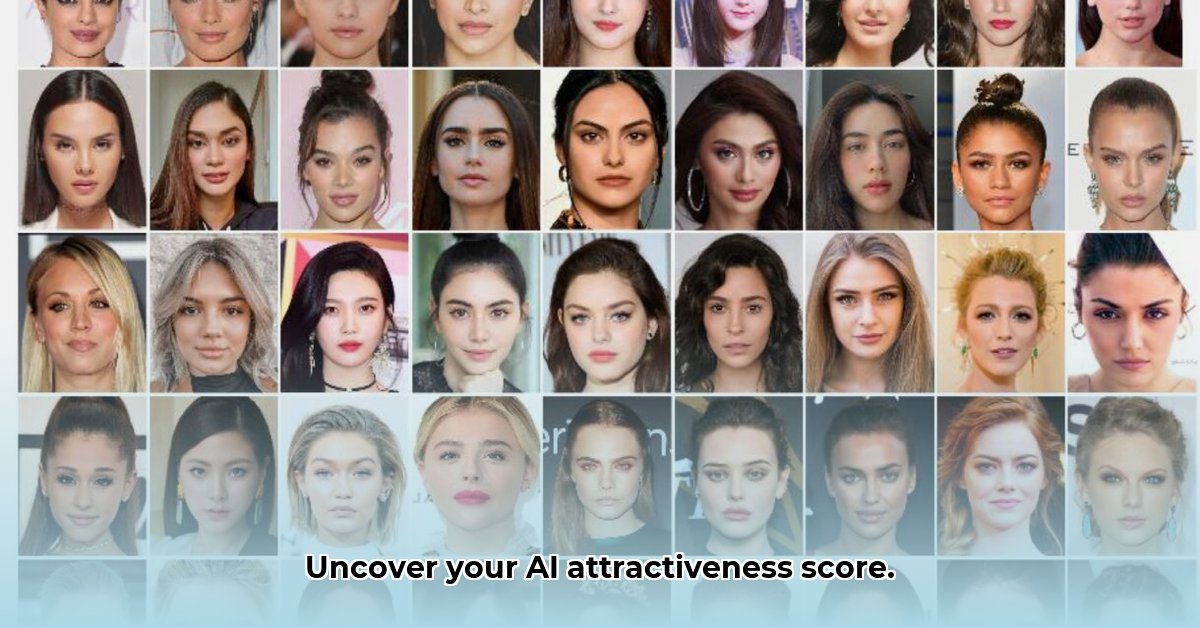
AI Attractiveness Rater: Decoding the Algorithm and Its Impact
The proliferation of online AI attractiveness raters raises critical questions about technology, ethics, and societal impact. These tools, promising instant beauty assessments, utilize advanced image processing techniques to analyze facial features, often referencing the "golden ratio" (a mathematical concept of ideal proportions) and assessing symmetry, skin texture, and overall facial harmony. But beyond the seemingly simple numerical score, lies a complex interplay of technology, bias, and ethical considerations.
How AI Attractiveness Raters Work: It's More Than Just a Pretty Face
These AI systems analyze facial images using sophisticated algorithms. They assess features like symmetry, proportion, skin tone, and texture, applying established—and often culturally influenced—aesthetic principles. The output? A numerical score representing perceived attractiveness, frequently accompanied by suggestions for improvement. However, the underlying algorithms are often proprietary, limiting transparency and raising concerns about objectivity.
The Science (and Guesswork) Behind the Score: Is it Really Objective?
While many raters cite studies on facial attractiveness, a crucial lack of comprehensive, peer-reviewed research exists to validate their accuracy across diverse ethnicities and genders. This lack of transparency, coupled with the inherent subjectivity of beauty standards, challenges the claim of objective assessment. Cultural variations in beauty ideals further complicate the issue; what one culture considers attractive, another may not.
The Ethical Tightrope: Balancing Innovation and Responsibility
The ethical implications are profound. The impact on users' self-esteem and mental health demands careful consideration. Could these tools exacerbate body image issues or promote unrealistic beauty standards? This necessitates a critical examination of the potential for psychological harm. Furthermore, data privacy concerns regarding image usage and storage are paramount. Transparency in data handling practices is essential to mitigate potential risks.
The Potential for Bias: A Mirror Reflecting Our Prejudices?
A significant concern revolves around algorithmic bias. If training data primarily comprises individuals from specific ethnicities or genders, the resulting AI may perpetuate existing societal biases, leading to unfair and potentially discriminatory assessments. This inherent bias highlights the urgent need for inclusive and representative datasets. Dr. Anya Petrova, a leading AI ethics researcher at MIT, states: "The algorithms are only as good as the data they're trained on. Biased data inevitably leads to biased results, with potentially severe real-world consequences."
The "Fun" Factor vs. Genuine Insight
Some raters incorporate additional metrics like "confidence" or "fun," adding layers of complexity. However, the validity of these subjective assessments remains questionable. The question remains: are these added features meaningful insights or merely marketing ploys designed to enhance the perceived value of the service?
A Balanced Perspective: A Number Doesn't Define You
While AI attractiveness raters offer a quick, data-driven evaluation, it's crucial to approach their results with caution. They are not a definitive measure of one's worth or attractiveness. Their limitations and potential for bias must always be acknowledged. They should be viewed as a form of entertainment, not a reliable metric for self-assessment.
The Future of AI Attractiveness Raters: Transparency and Responsibility
The future trajectory of these tools hinges on transparency, bias mitigation, and ethical considerations. Collaboration among developers, researchers, and policymakers is crucial to establish clear guidelines for responsible development and deployment. This includes increased transparency in algorithms and rigorous testing to identify and correct biases.
Your Role: Embrace Critical Thinking
Users must engage in critical thinking when interpreting results. Beauty is multifaceted and subjective; reducing it to a single numerical score is an oversimplification. These tools should be considered a point of entertainment, but not an accurate measure of self-worth.
How to Mitigate Algorithmic Bias in AI Attractiveness Assessments
The inherent biases present in AI attractiveness raters stem from training data that often reflects existing societal beauty standards. This creates a self-reinforcing cycle where biased data produces biased results, reinforcing those very biases. The question then becomes how to mitigate these biases and create fairer assessment systems.
Strategies for Addressing Algorithmic Bias
Addressing algorithmic bias requires a multi-pronged approach:
Data Diversification: Expanding the training datasets to include a wider range of ethnicities, body types, ages, and genders is crucial for a more representative assessment. This step alone will not entirely resolve the bias issue, but it's foundational.
Algorithmic Transparency (Explainable AI): Implementing Explainable AI (XAI) techniques allows for a better understanding of how the algorithms work, making it easier to identify and correct biases.
Bias Detection and Mitigation Tools: Utilizing dedicated tools designed to detect and mitigate bias in algorithms and datasets is vital for ongoing monitoring and correction. This ensures consistent fairness.
Blind Testing Methodologies: Employing blind testing techniques, where identifying information is removed from the input, minimizes the influence of demographic factors.
Beyond the Algorithm: Ethical Considerations
Addressing the ethical considerations is as crucial as mitigating the algorithmic bias itself. This includes understanding and addressing the potential impact of AI-generated scores on individuals' self-esteem, the perpetuation of unrealistic beauty standards, and the responsible disclosure of algorithm limitations and potential biases to users.
This article is a work in progress still under development. More details to be added.